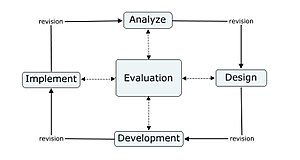
The ADDIE model is an instructional design tool that can help HR and training professionals create, organize, and streamline effective learning and development programs in their organization.
The ADDIE model is a systematic instructional design framework used to guide the process of creating education and training programs. Standing for Analysis, Design, Development, Implementation, and Evaluation, ADDIE serves as a comprehensive roadmap for instructional designers and training developers.
The ADDIEmodel is the generic process traditionally used by instructional designers and training developers. The five phases—Analysis, Design, Development, Implementation, and Evaluation—represent a dynamic, flexible guideline for building effective training and performance support tools.
This article discusses the background and evolution of the ADDIE methodology, its basic concepts, and the application of ADDIEmodel in teaching and learning. It will also explain each phase of the ADDIE framework and discuss its possible implementations.
What is the ADDIE model? The ADDIE model is a systematic instructional design framework that consists of five phases: Analysis, Design, Development, Implementation, and Evaluation. It is used by instructional designers and training developers to create effective learning experiences.
The ADDIE model is a framework used in instructional design and training and development to guide the creation of learning experiences and performance support tools. The acronym stands for five phases— Analyze, Design, Develop, Implement, and Evaluate. [1]
What is the ADDIE model? The ADDIE model is a five-step learning evaluation model used by instructional designers and trainers to design, develop, implement, and evaluate learning programs. The acronym ‘ADDIE’ stands for Analysis, Design, Development (or creating), Implementation, and Evaluation.